Most people do — and that's one of the reasons theirs doesn't work. The real test of a methodology isn't whether it makes sense in a training room. It's what happens when a buyer goes off script, the deal gets complicated, or the competition changes the game.
Axiom is different.

People don’t want to be sold to — they want to be helped.
This is the axiom behind our name — and the foundation of everything in the methodology.

The selling methodology
Sellers assume the buyer needs help understanding their solution. But buyers aren’t struggling to understand solutions — they’re struggling to figure out what’s best for them. That’s why they’re talking to a salesperson in the first place.
When sellers focus on pitching instead of helping buyers develop real decision criteria, the buyer never gets confident. And buyers who aren’t confident default to one of three outcomes.
No Decision
If they don’t have to decide, they won’t. The deal stalls indefinitely.
The Status Quo
If they have to decide but aren’t sure why they should change, they stick with what they know.
Lowest Price
If they have to decide and don’t have a preferred alternative, cost is the one thing they can easily compare.
See how transforming sellers into trusted advisors drove breakthrough results for this SaaS company.
Read the Case StudyA different starting point
Most qualification frameworks are built from the seller's perspective: what does the seller need to know to win? That misalignment is exactly how sellers end up pitching the wrong solutions, to the wrong buyers, in the wrong way. The BIO™ Framework (Buyer Information Objectives) starts from the opposite direction — defining what the buyer needs in order to make the best decision possible.
Typical frameworks
What does the seller need to qualify the deal?
Buyer Information Objectives
What does the buyer need to make the best decision?
Look at the right column again. Every piece of intelligence a seller needs to qualify, forecast, and compete is in there — budget signals, decision authority, competitive landscape, timeline. The result is complete alignment: the buyer gets a better process, and the seller gets better information. Not one at the expense of the other — both, because of each other.
The foundation underneath
The methodology includes dozens of proprietary frameworks, models, and tools. Here's one example of how three of them work together.
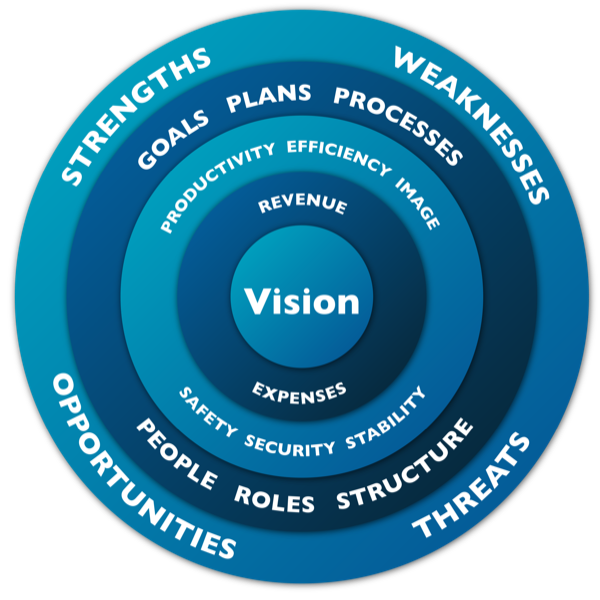
The Business Wheel™ — The Map
The outer rings map what a business does — goals, plans, people, structure. The inner rings map why those things matter — how they affect revenue and expenses. Most sellers can talk about what a company does. The best sellers understand why it matters.
PIERS™ — The Lens
Inside the wheel, every business issue connects to impact areas buyers actually care about: Productivity & Efficiency, Image, Expenses, Revenue, and Safety, Security & Stability. The lens that turns a surface-level conversation into one the buyer values.
DIG™ — The Conversation
A structured model for exploring any business issue: understand the situation (Description), explore why it matters (Impact), and quantify what’s at stake (Gap). The Business Wheel gives sellers the map. PIERS gives them the lens. DIG gives them the conversation.
One company. The complete methodology.
If the training feels disjointed — one model for questioning, a different one for presenting, a coaching framework that doesn't connect to either — there's a reason. Most of the major sales training companies aren't one company anymore. They're portfolios of acquisitions, assembled over the last decade through private equity consolidation. Each piece was built independently, with its own terminology, its own logic, and its own philosophy. Rebranding them under one name doesn't make them one methodology. Sellers feel it in the classroom. Buyers feel it in every conversation.
The industry norm
The Axiom approach
The coaching methodology
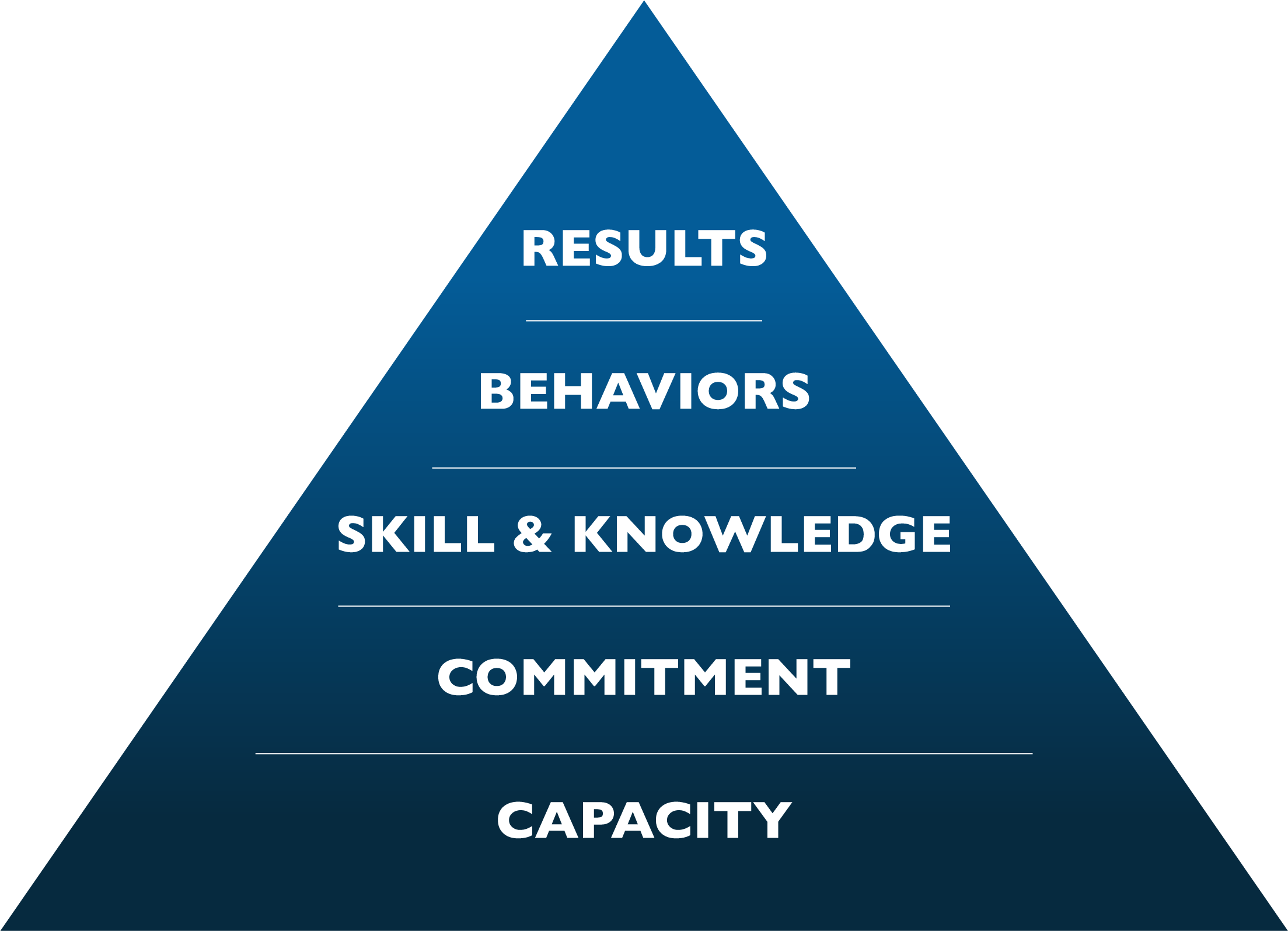
Most coaching models teach managers how to give structured feedback — observe results, address behaviors, repeat. The problem? They’re only working the top two levels of the Performance Pyramid. The manager ends up sending the same person, with the same skills, into the same environment — and expecting a different result.
GUIDE teaches managers to diagnose below the surface. Is the gap a skill deficiency? A commitment issue? A capacity problem? Each requires a fundamentally different corrective action — and until managers can tell them apart, they’re not coaching. They’re just giving feedback.
GUIDE structures this diagnostic discipline across all five coaching activities — from opportunity reviews to development planning — so every coaching conversation moves people forward, not in circles.
The Sales Success Formula
A better methodology matters because it drives better proficiency. A methodology people cannot learn, do not trust, or will not use will not support proficient execution.
If a team missed its number this quarter, the miss didn’t happen this quarter. It happened weeks or months earlier — maybe longer, depending on the sales cycle — when activity or proficiency gaps went undetected on the left side of this equation. By the time results come in short, the damage was already done. The miss was always predictable. The only question is whether anyone was measuring the right things early enough to see it coming.
Activity
New opportunities, new proposals, calls, meetings
Proficiency
Proposal ratio, closing ratio, average sale value, sales cycle
Sales
Revenue, margin, wins, forecast accuracy
The difference between a sales goal and a sales dream is a plan. Nearly every salesperson has a number — an income target, a quota, a revenue objective. Few can say what activity and proficiency they need to achieve to hit that number. Without those predictive targets, a goal is just a dream. With them, it becomes a plan we can execute against, measure against, and adjust in real time.
Download the worksheet and watch the short walkthrough — together they turn any income goal or sales objective into a working Sales Success Plan.
A skill path walks through one methodology skill end to end — overview lesson, comprehension check, and AI practice session with a realistic buyer. No account required.