If your team has been through training they enjoyed but couldn't apply, or invested in sales technology that looked impressive but didn't move the needle, that's obviously a problem. The question is “Why?” It's probably not your people, or bad intentions on the part of your training or tech provider — it's bad science. For far too long, sales training and technology have been built on dubious “best practices” instead of real science.
Axiom is built on science.


Every element of the Axiom Sales Excellence System — the methodology, the model, and the platform — is grounded in established science from fields outside of sales. Here are the four disciplines that form the foundation.
Shows what people do when they make purchasing decisions.
Useful for understanding patterns — but patterns don't tell a seller what to do in a specific conversation with a specific buyer.
Explains how and why they do it.
Provides a blueprint for a trusted advisor to follow — not assumptions, but principles that apply to any differentiated decision.
The counterintuitive insight: When a buyer asks for a discount, they're not trying to pay less — they're trying to assess whether they're getting the best deal possible. Give a discount too easily and their confidence drops. Make them work for it and they end up more confident in the outcome. This is why we teach objection handling as collaboration, not capitulation.
“Attending Axiom was like getting an informal MBA. It allowed me to move from a sales to operations role because it gave me a framework for making effective business decisions.”
— Tim Mayhew, Vice President Sales – Growth Markets, Fastly

Two questions drove everything: How do we design language people will actually remember under pressure? And how do we deliver learning so it transfers to long-term capability — not just short-term awareness?
Words create cognitive frames that shape how people think and act. We hired a neuroscientist for a full year to redesign every term: Does this reflect the buyer's perspective? Will this acronym be retrievable under pressure? The result is a language system clients actually adopt — because the terms are that intuitive.

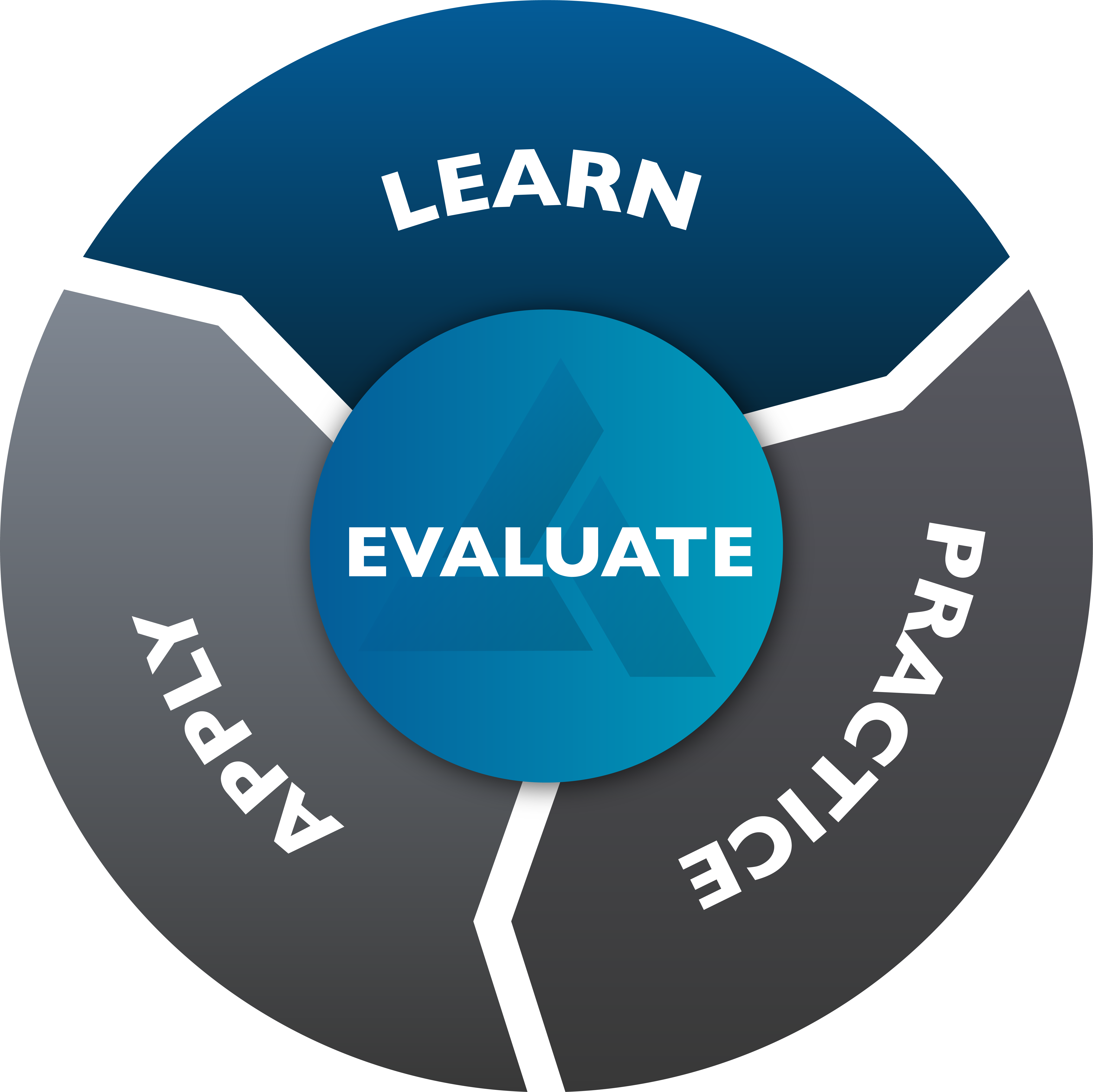
LPAE — an established model in adult learning science
The LPAE model — Learn, Practice, Apply, Evaluate — describes how adults actually develop skills. Traditional training compresses everything into 'Learn' and skips the rest. Only a few people in any training class demonstrated the discipline to apply the LPAE model on their own, and they did it outside the training.
After decades of seeing this cycle repeat with our clients, Axiom partnered with Western Michigan University to validate our observation — sales training events cannot develop proficient sellers or coaches — so we built the system that can.
The methods that produce elite athletes aren't secrets — they're well-documented. Clearly defined techniques. Deliberate practice. Coaches who diagnose root causes, not just observe results. No plant manager would try to increase output by yelling at workers to produce more — they'd measure inputs, operating efficiency, and output. Yet that's exactly how most sales organizations operate.
“They don't care what you know until they know how much you care.”
— Pat Summitt, Head Coach, Tennessee Lady Vols


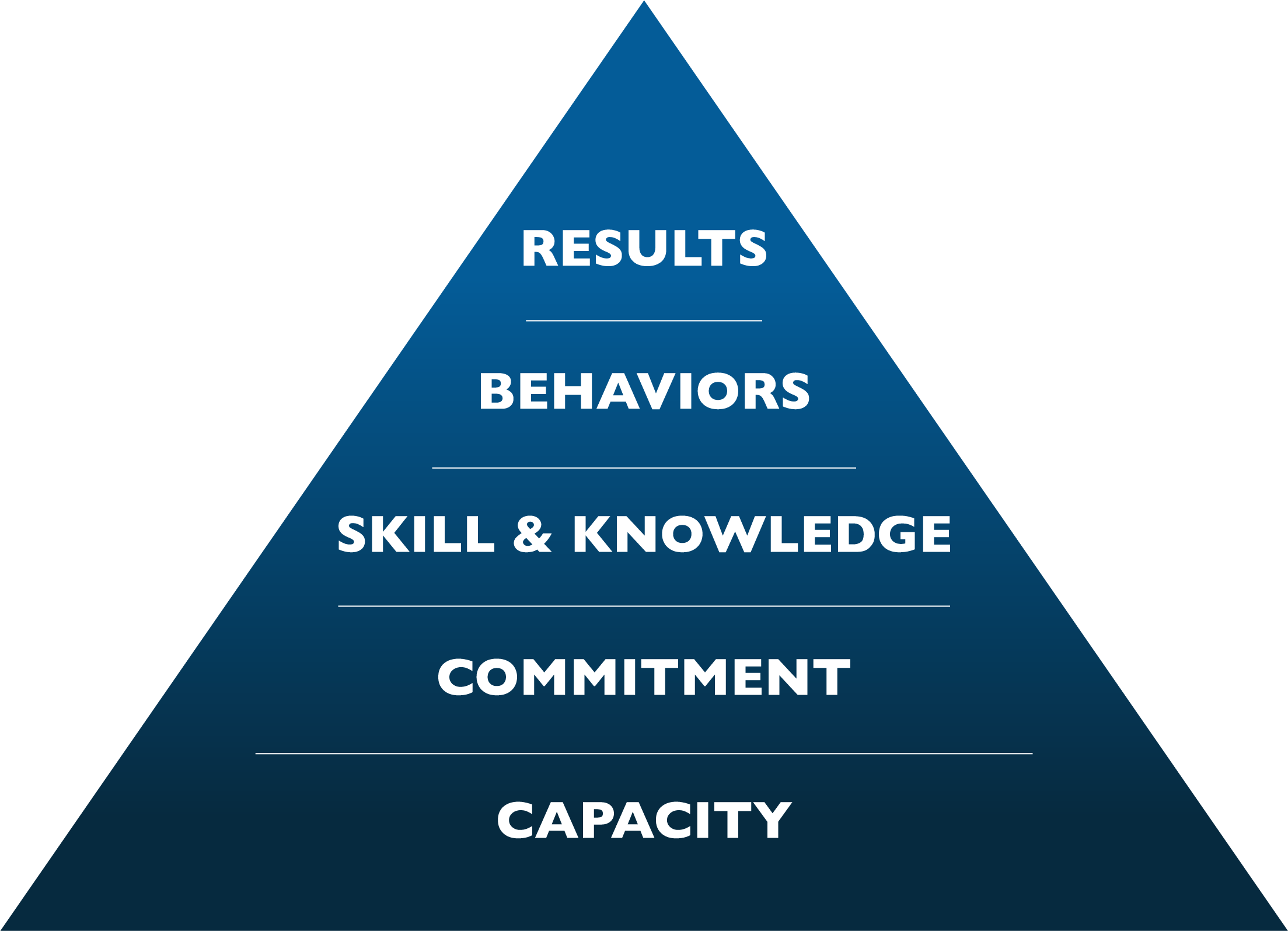
The Performance Pyramid
Summitt's insight is why we teach managers to understand each person's underlying motivation before assigning goals — not hand them a quota. A manager who doesn't know what drives someone has no leverage when that person struggles.
The Performance Pyramid, the GUIDE coaching model, and goal setting (not quota setting) all came from studying how great coaches develop talent. The Sales Success Formula applies production science to selling: Activity × Proficiency = Sales — the same input-efficiency-output metrics any operations leader would recognize.
Athletes, musicians, and surgeons all share something sales professionals don't: a practice habit built from an early age. They showed up on a schedule, worked on specific techniques, and got immediate feedback — week after week, year after year. By the time they turned professional, the habit of continuous improvement was automatic.
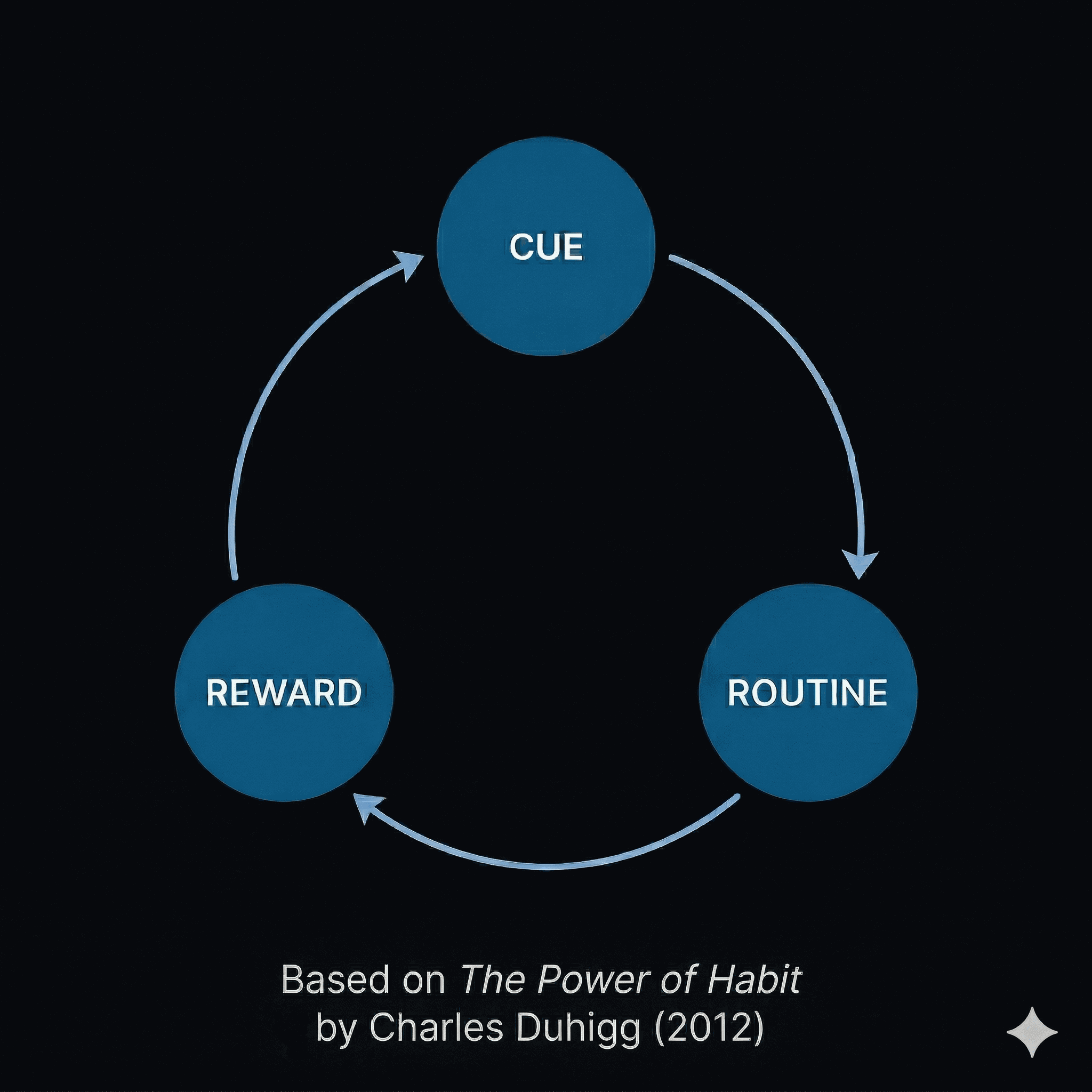
Sales professionals never built that habit. No one taught them to practice. So when organizations invest in training, the skills often fade — not because the content was wrong, but because there's no system reinforcing the loop. Drawing on research from Charles Duhigg (The Power of Habit) and James Clear (Atomic Habits), we engineered Kinetics to build the habit that was never formed.

A weekly email that shows progress, recognizes accomplishments, and presents the next activity. No searching, no decisions — the path is laid out.
One hour, same time every week — blocked on the calendar. A focused learning or practice activity, brief enough to fit the week, meaningful enough to build real skill.
Immediate feedback, a proficiency score, a badge earned. Managers get the visibility to recognize progress and bridge the gap between learning and application — so the payoff happens now, not months later when a deal closes.
Over time, getting better stops being an assignment and becomes a habit. That's not motivation — it's engineering.
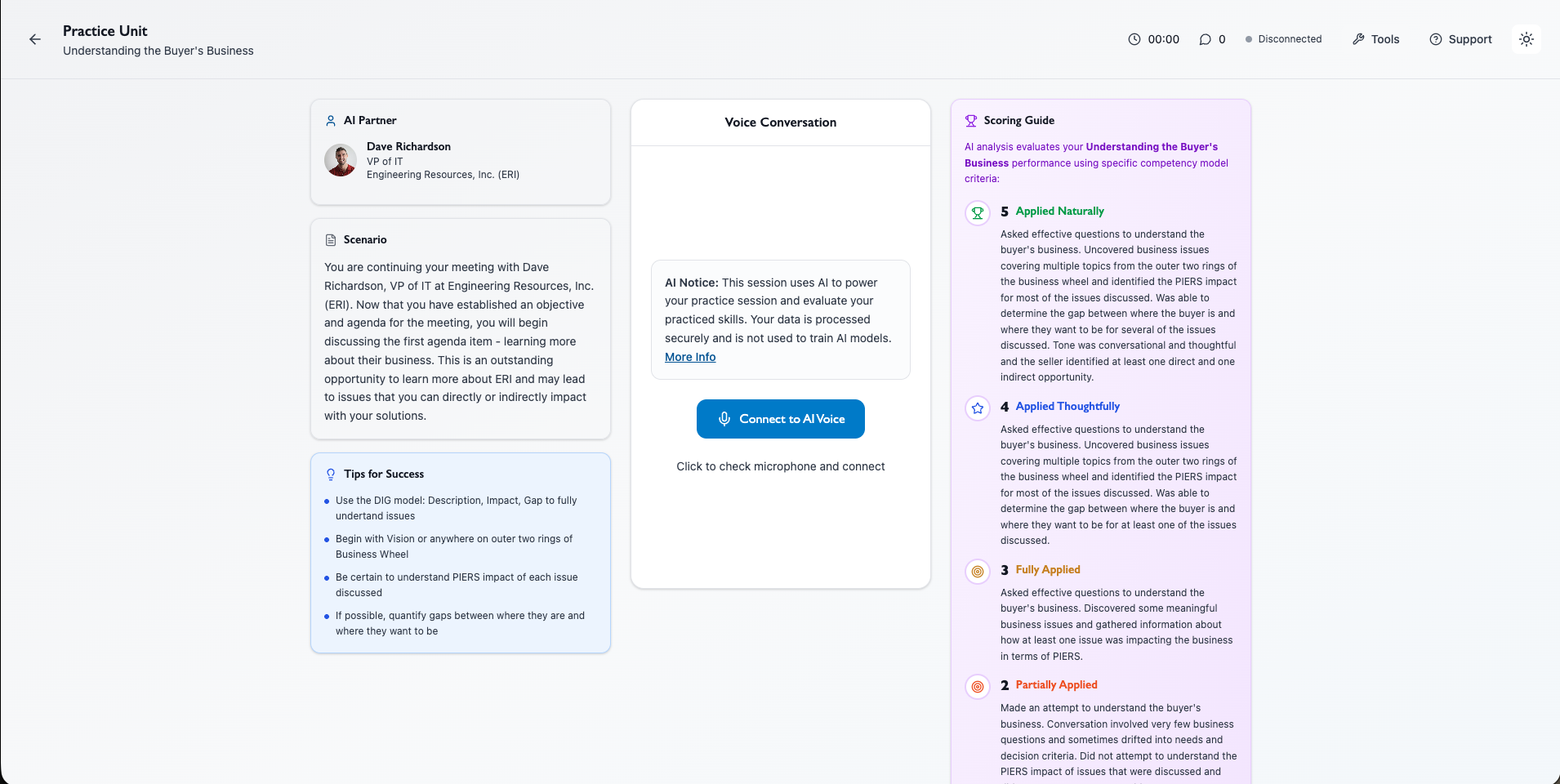
A skill path is what the LPAE model looks like in practice — structured learning, immediate comprehension check, deliberate AI practice. Try one and judge for yourself.